wad to window… part 2
The story behind a specially commissioned set of handwoven
curtains - crafted from plant dyed hand spun Siroua wool.
join us as we tell the story of the creation of the cloth for the project - we visit the Wad (River) in the High Atlas, where the wool is washed and hand spun by local Amazigh women, meet the dyer, who uses his skills to create subtle shades using this ancient dye, the weaver of the cloth and finally the making up of the curtains for our discerning client.
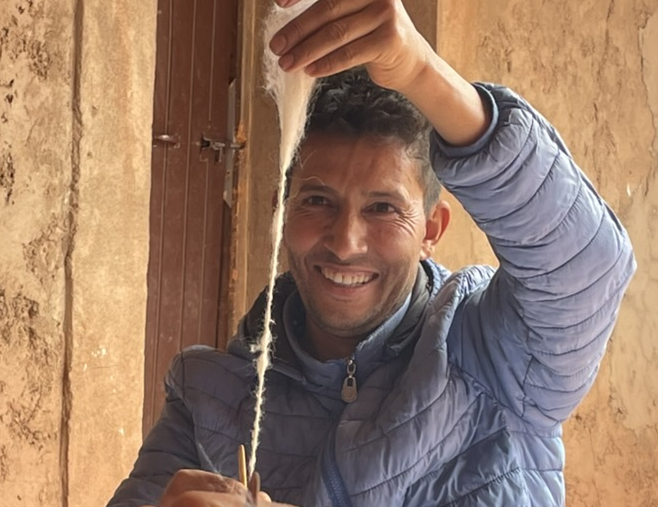
Master dyer Ahmed trying his hand at hand spinning on a visit to the co-operative in the Atlas Mountains.
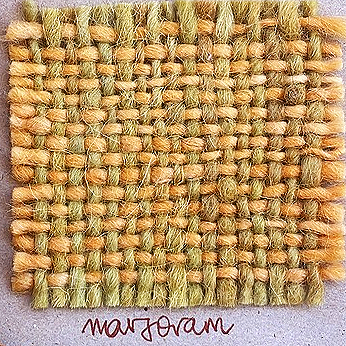
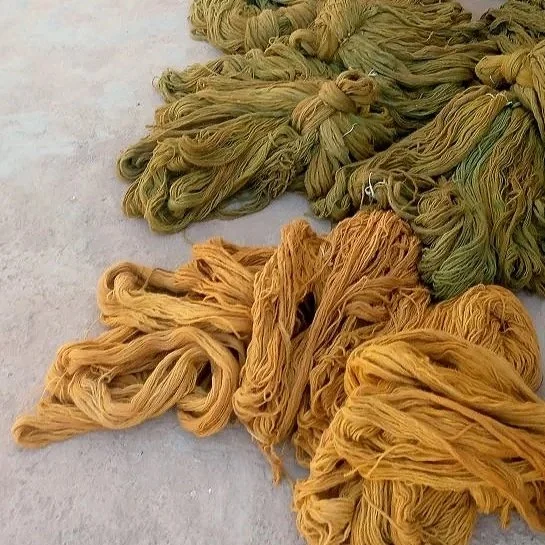
Our client wanted us to create a special pair of bespoke curtains for her beautiful home here in the Essaouira countryside. She selected a simple plain weave design ‘Marjoram’ in two shades of henna-dyed Siroua wool.
PREPARING THE SKEINS FOR DYEING
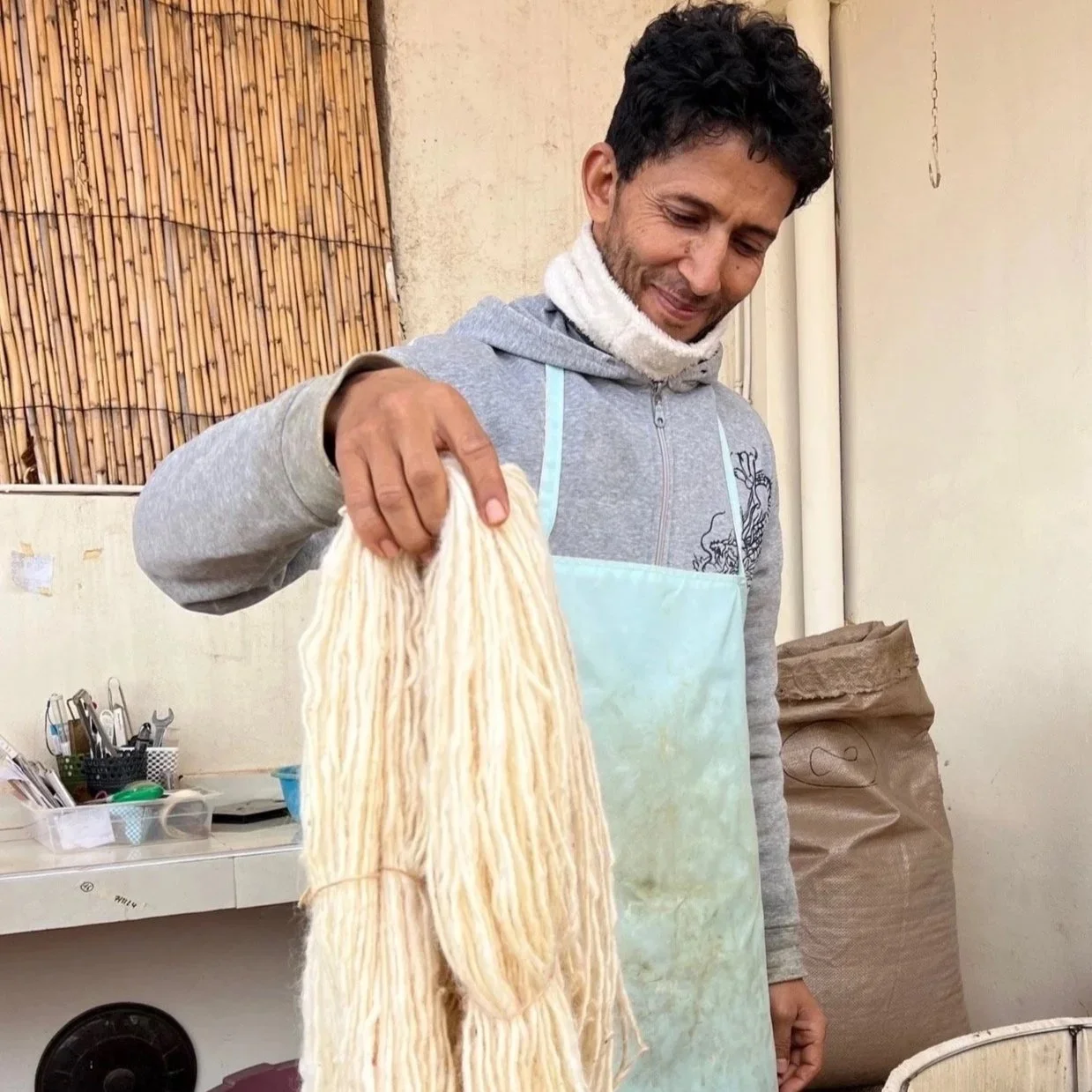
Both colours used in the design are created using Henna grown in the south of Morocco. To prepare the wool to take the colour, we first pre-mordant the wool using alum which is sourced locally. Mordanting helps the colour fix to the wool and adds to the lightfastness and brightness of the shades.
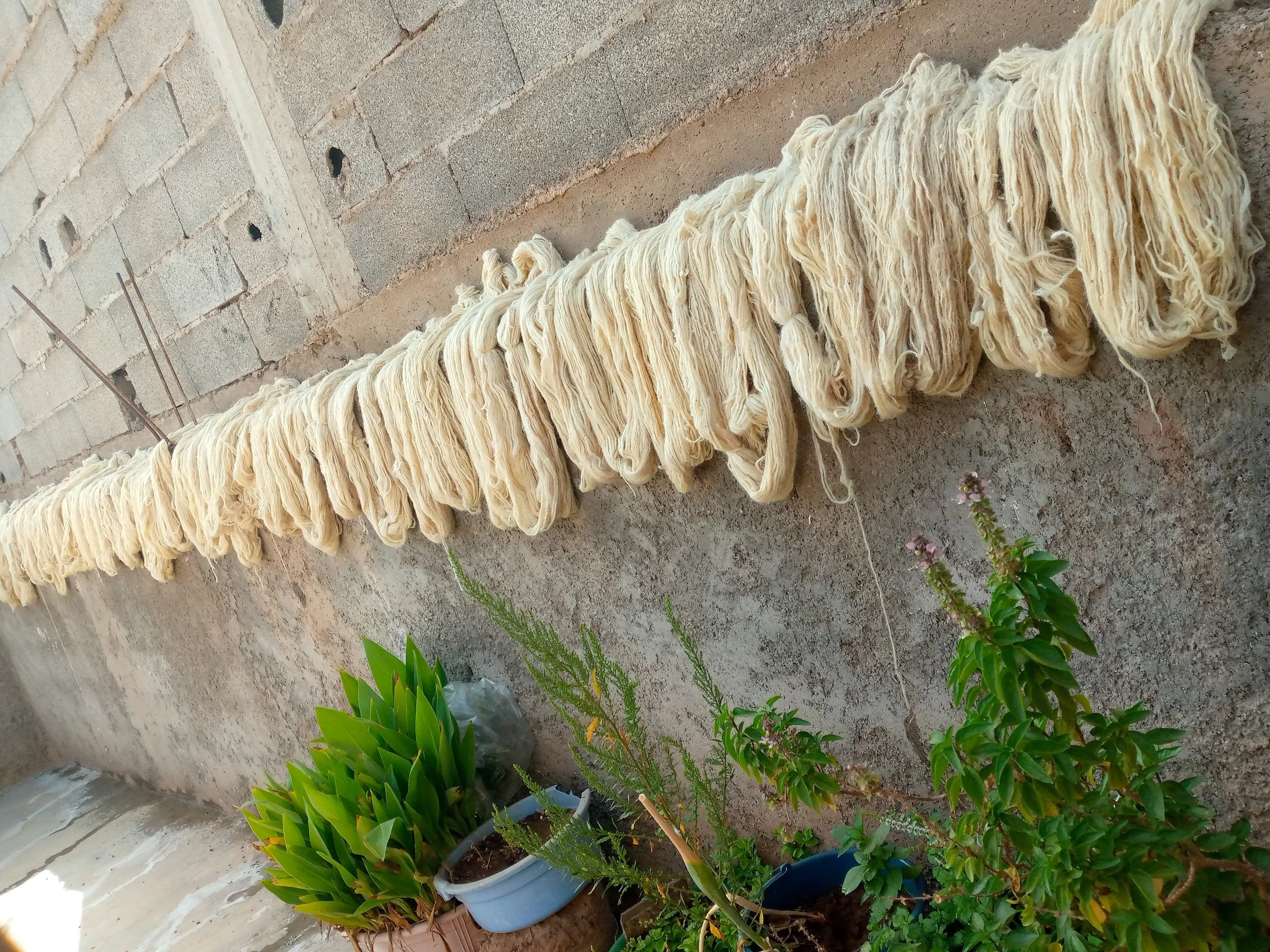
Siroua handspun wool skeins after pre-mordanting with alum

THE DYE PROCESS
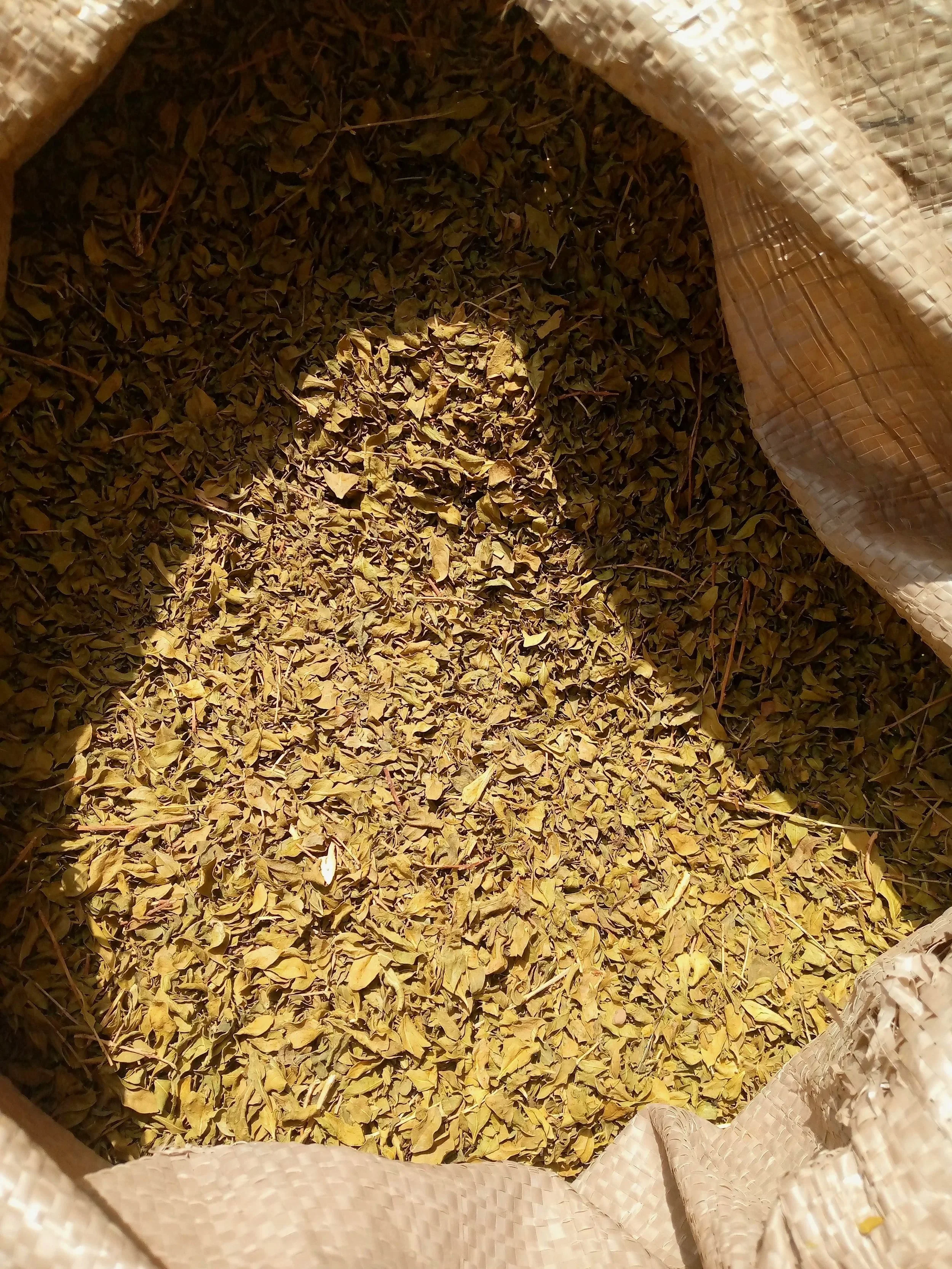
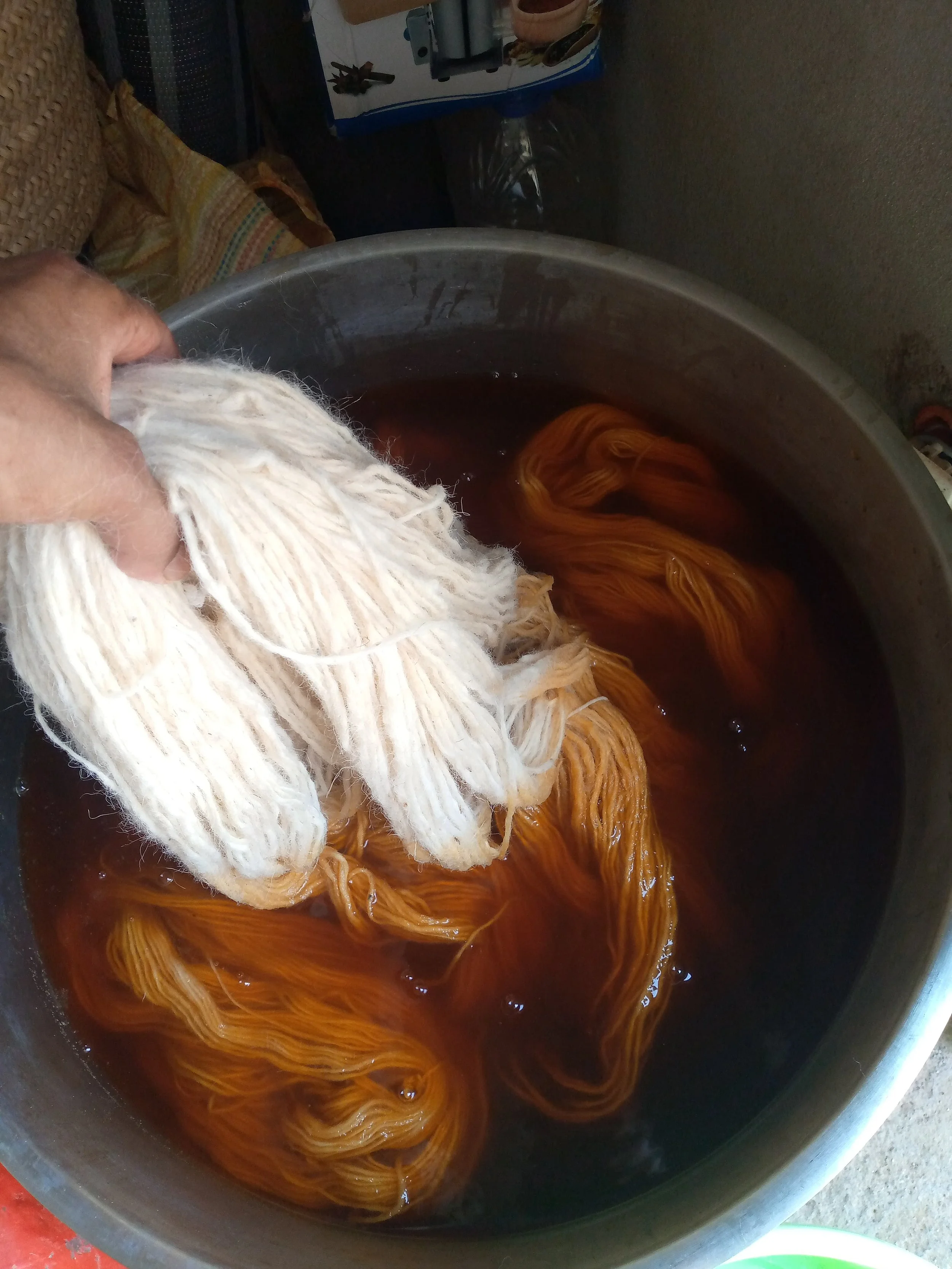
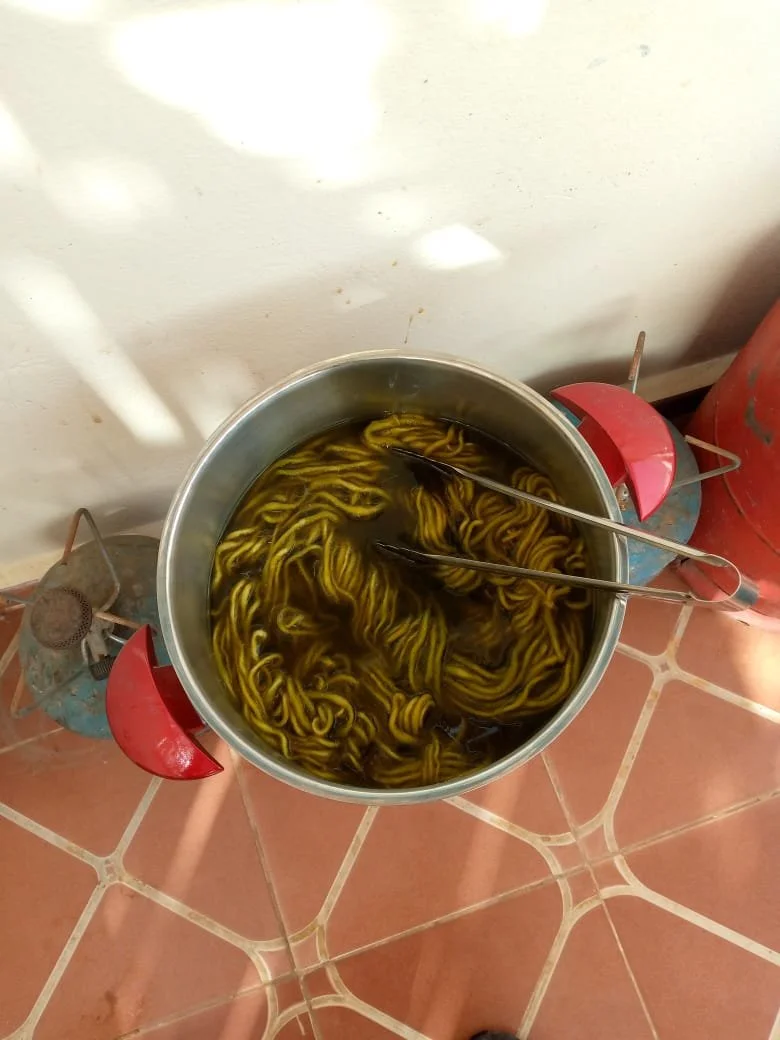
Master dyer Ahmed prepares the dye bath by grinding the dried henna leaves into a green powder (what you usually see when you buy henna powder) and mixes this with water to fill the pot.
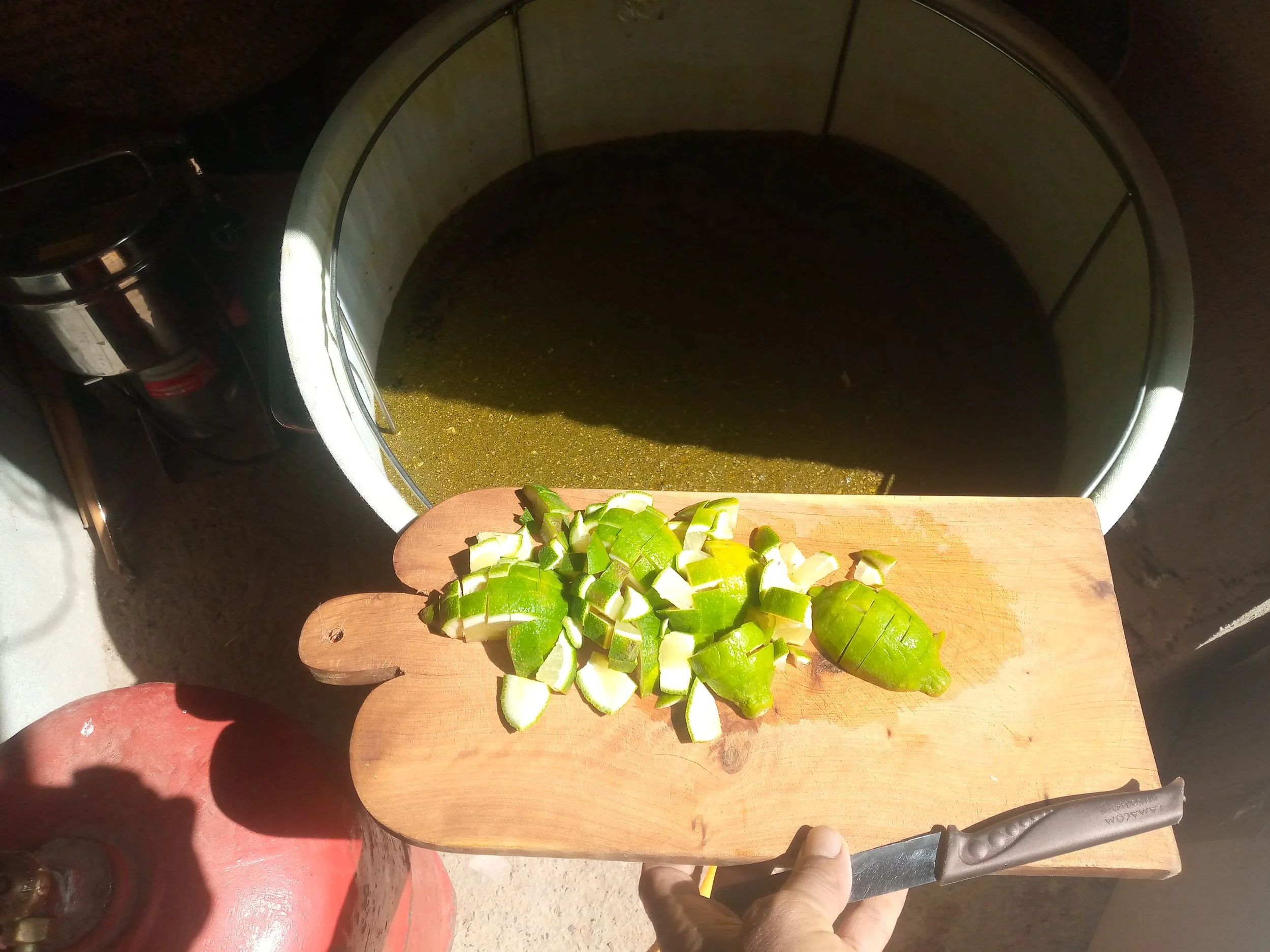
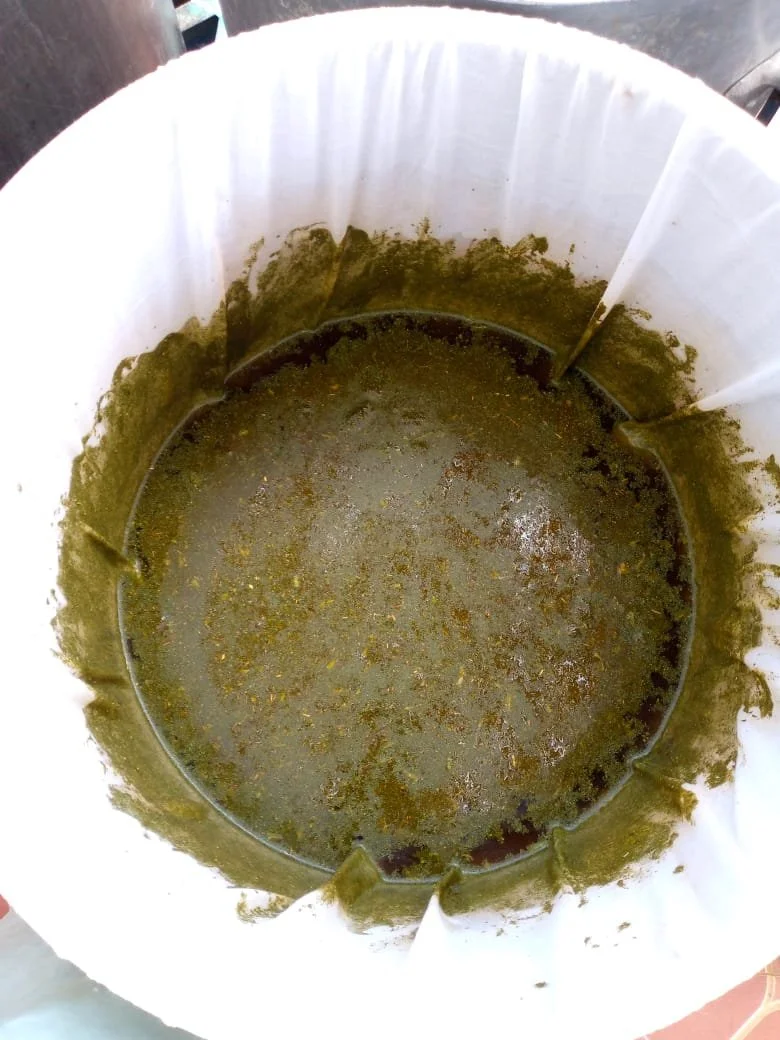
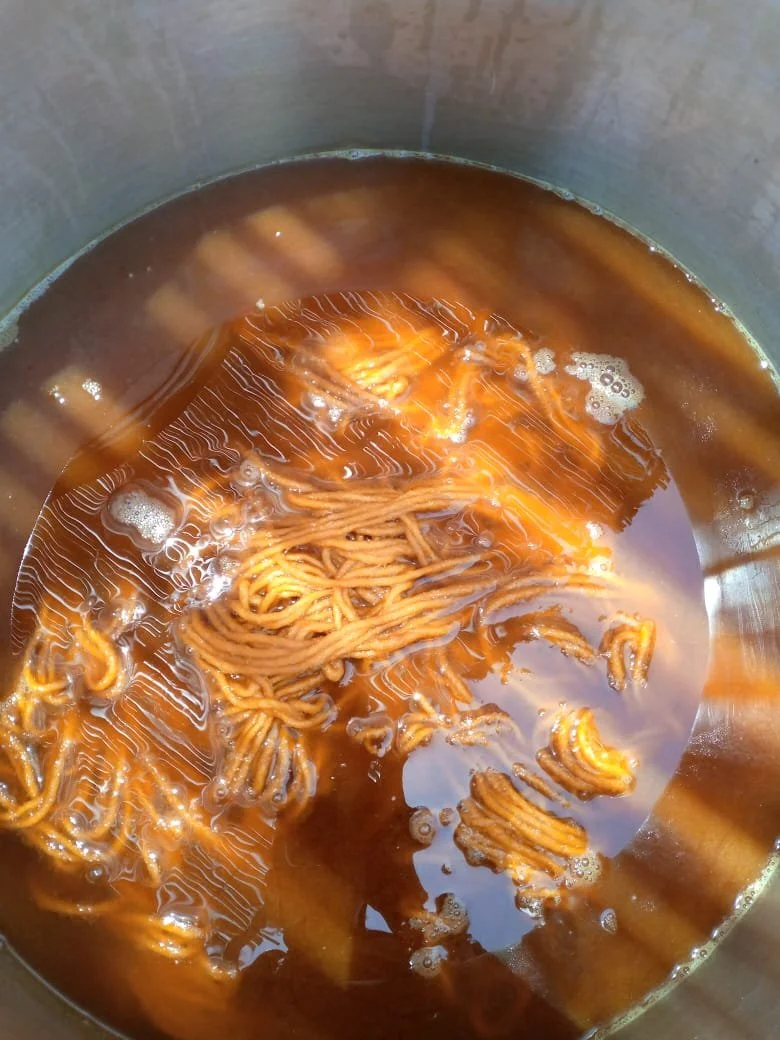
He then adds chopped lemon, a natural source of citric acid, to help bring out the colour and add brightness. The colour is extracted over a low heat for several hours, strained through fine muslin to leave a clear amber liquid dye bath.
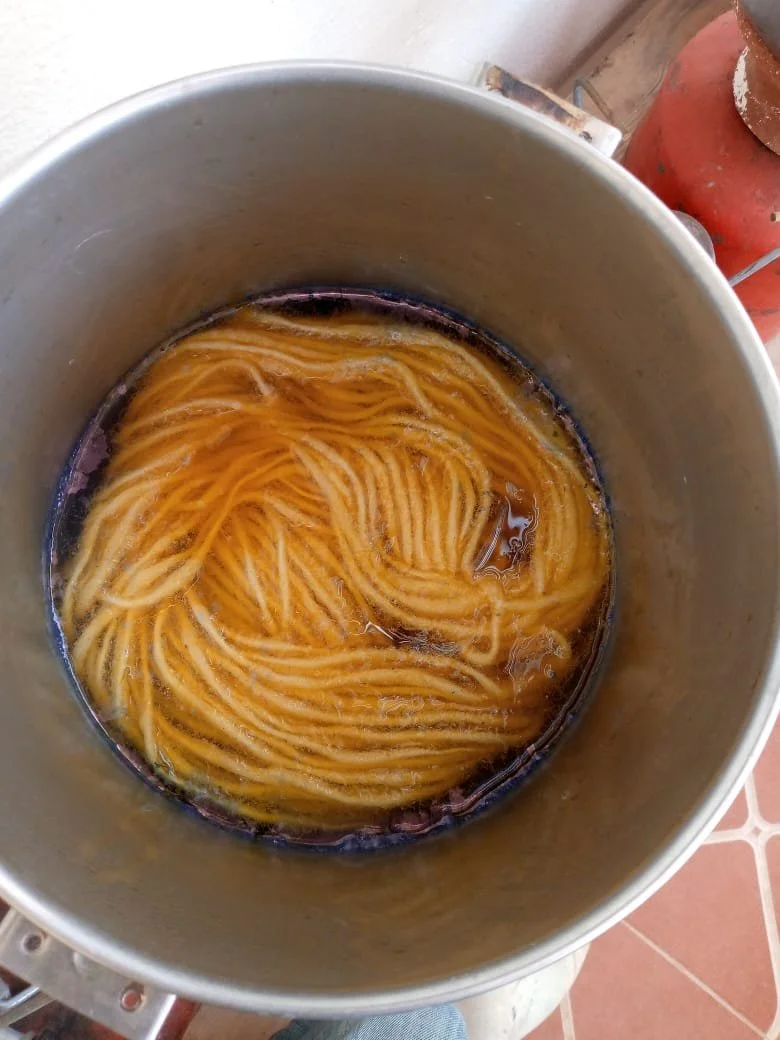
The damp, pre-mordanted wool skeins are introduced to the dye bath and allowed to cook for an hour or until the desired shade is achieved, removed from the bath and cooled. Sometimes the wool rests overnight in the bath to achieved a stronger colour.
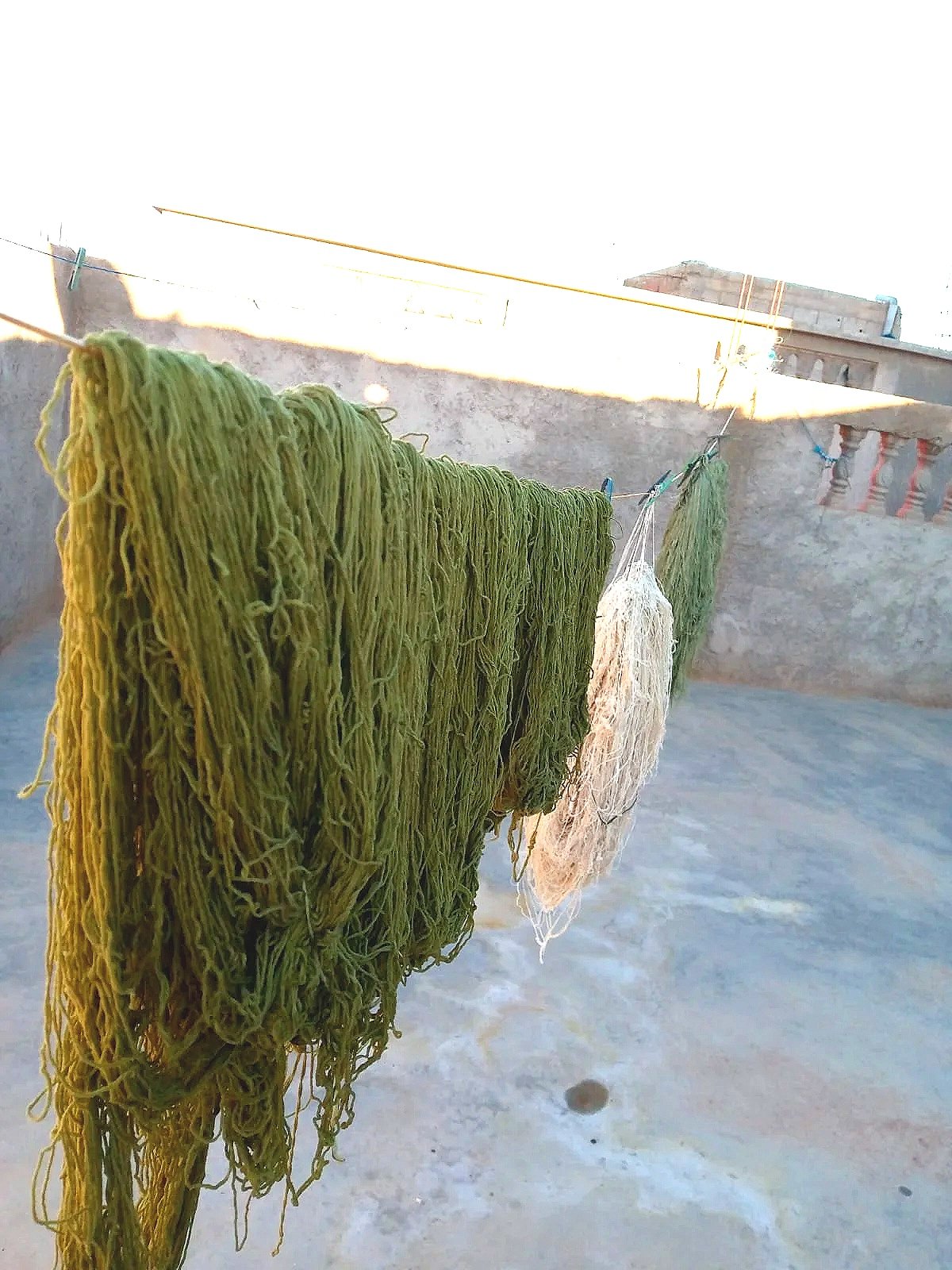
Next the wool is added to a modification bath to achieve the desired colour, we use copper for the green shades and more citric acid if yellower tones are required.
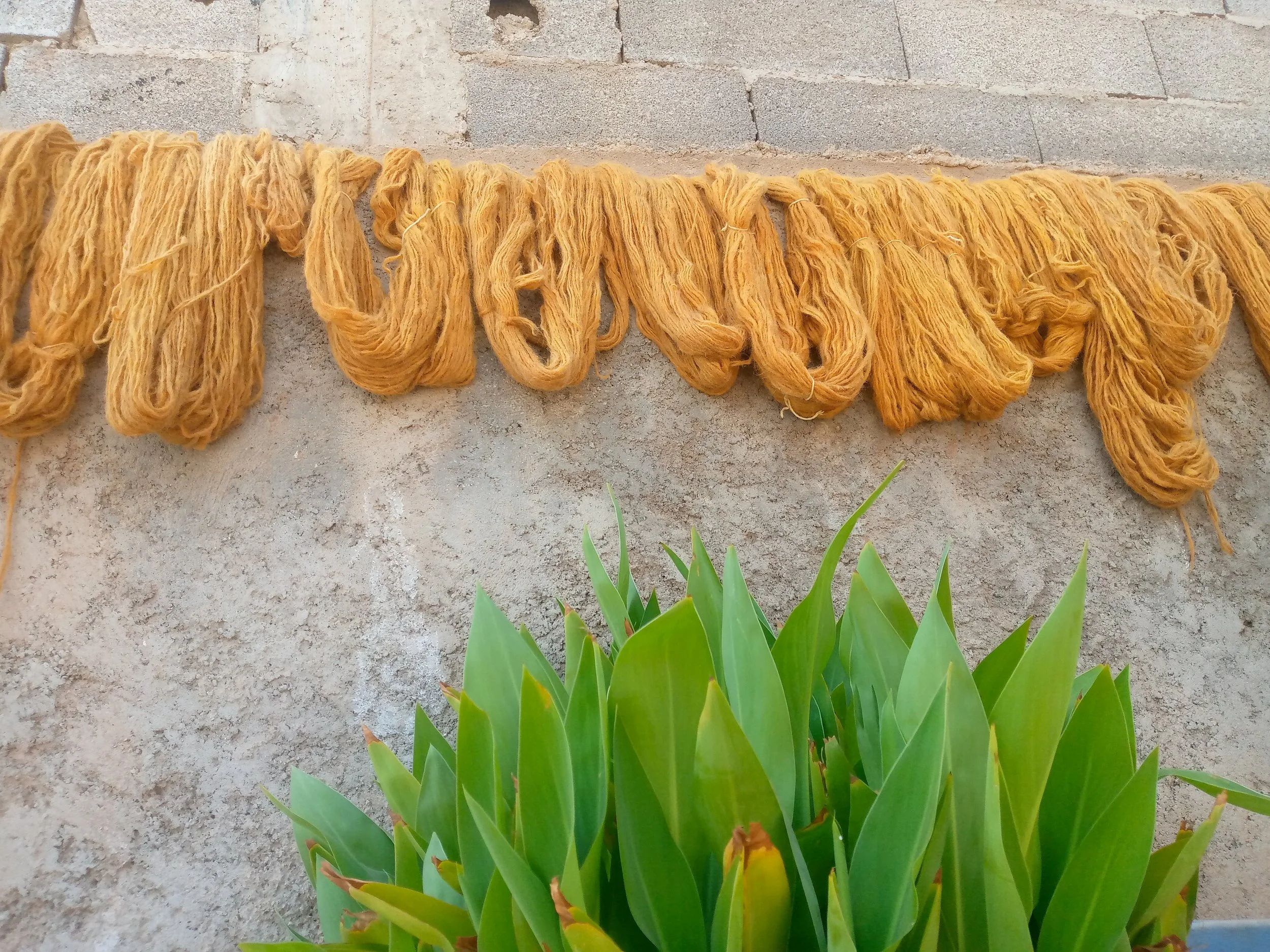
Finally the wool is washed in gentle soap, rinsed and line dried in the shade, ready to go to the weaver.
Next… weaving the cloth